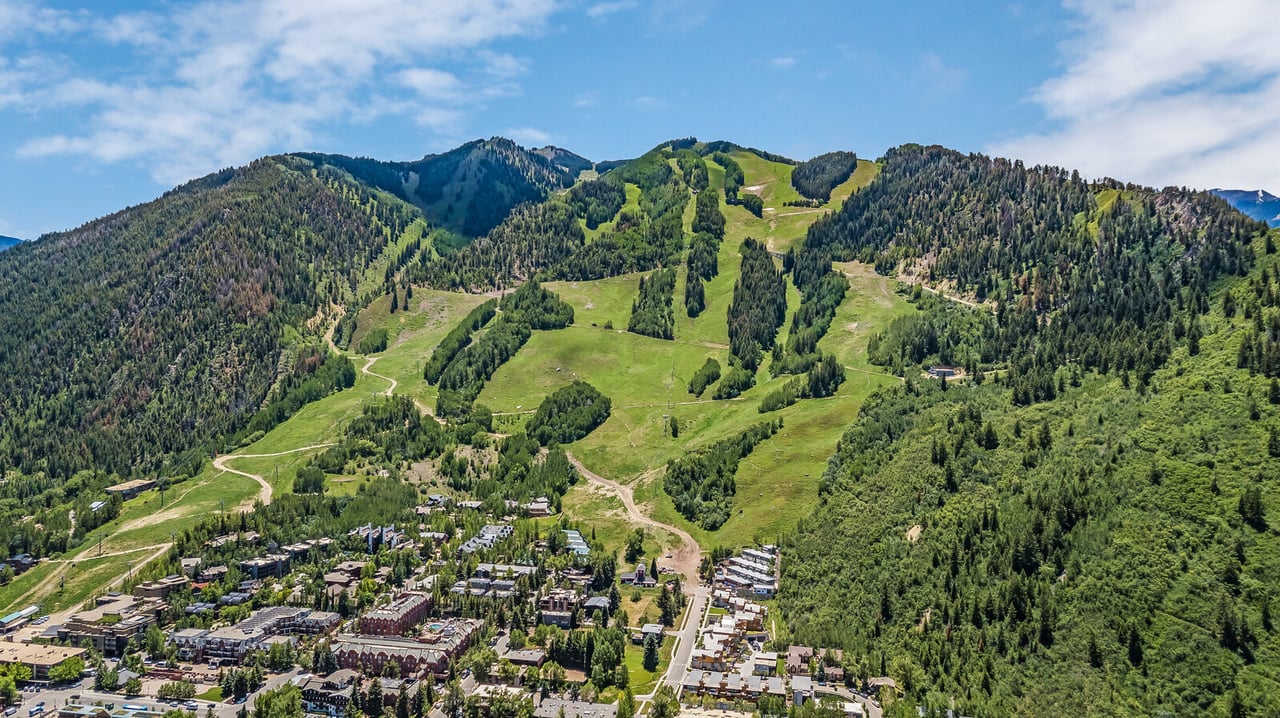
For generations of Aspen skiers, the ride up Lift 1A has been part of the experience: an old-school double chair, a steep approach, and a direct connection to the western base of Aspen Mountain. Now, that era has officially come to an end.
After more than five decades of operation, Lift 1A is being removed as part of one of the most significant transformations Aspen’s has seen in decades. What is taking its place is much bigger than a new ski lift. It is the redevelopment of the historic Lift One corridor—a project that will reconnect downtown Aspen with the place where modern skiing in the community began.
The original Lift One opened for the 1946–47 season and was, at the time, the longest and highest chairlift in the world. In the 1970s, it was replaced by the Lift 1A that generations of Aspen skiers came to know. Today, the historic Lift One story is being brought back into the landscape in a new way.
A New Gateway to Aspen Mountain
The centerpiece will be a new telemix lift, combining traditional chairlift seats and enclosed gondola cabins. Most importantly for skiers, the new base will be located farther downhill, closer to Dean Street and downtown Aspen. The goal is to create a more accessible and intuitive western gateway to the mountain while increasing lift capacity.
According to the City of Aspen, the redevelopment encompasses the area stretching from the intersection of South Aspen Street and Dean Street to the existing Lift 1A base. The plan includes a new lift, base area and skier return, along with new public spaces and skier amenities.
But the lift is only one piece of the story.
Flanking the new ski corridor will be a collection of lodging, residential, restaurant and cultural uses that will fundamentally change the character of this part of Aspen.
Chalet Alpina, the project formerly known as Lift One Lodge, is now moving into construction. The development combines resort residences, lodging, membership amenities and commercial space and is being developed alongside the restoration and relocation of the historic Skiers’ Chalet buildings. Groundbreaking was announced September 8, 2026, marking a major milestone after more than a decade of planning and approvals.
Across the corridor, the former Gorsuch Haus project is now moving forward as an Aman hotel, adding another major hospitality component to the neighborhood. The City describes the broader Lift One corridor as a multi-stakeholder project involving the city, Aspen Skiing Company, the developers and the Aspen Historical Society.
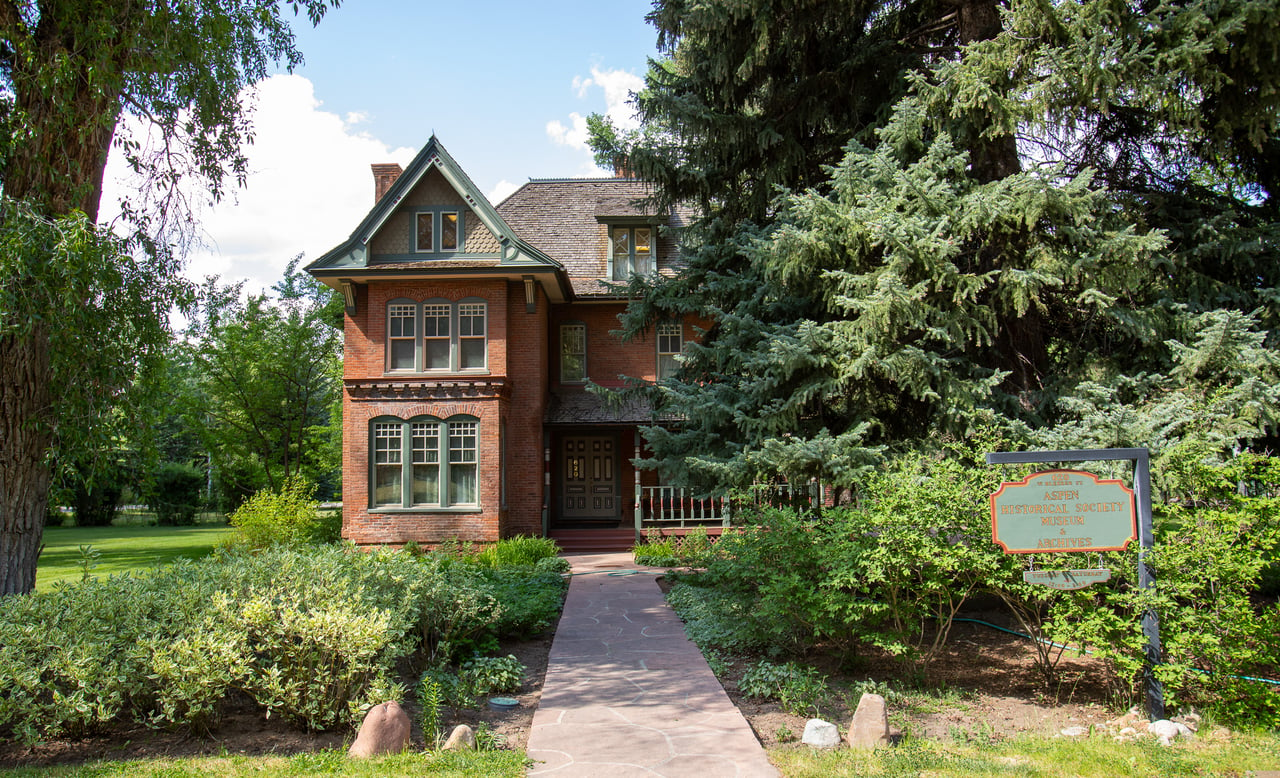
The historic Skiers’ Chalet Lodge, which became an important part of Aspen’s ski culture after opening in the 1960s, will be relocated and rehabilitated. It is planned to house skier services as well as a new Aspen Snowsports History Museum operated by the Aspen Historical Society. The museum currently has a target opening of early 2030.
The Skiers’ Chalet Steakhouse will also be relocated and restored, creating a restaurant component within the new neighborhood.
Why This Matters Beyond Skiing
For Aspen, this is really a story about reconnecting history, infrastructure and the town itself.
The western base has long been somewhat disconnected from the heart of downtown. The new lift changes that relationship by moving the skier loading area closer to Dean Street while creating a more substantial pedestrian and public realm around it.
It also represents an unusual marriage of private development and public infrastructure. The new lift, historic preservation, parks, skier facilities, museum, restaurants and lodging are being constructed as parts of a single coordinated corridor.
The sequencing is complicated. Aspen Public Radio reported in August that the new lift is currently expected to begin operating for the 2029–30 ski season, meaning skiers will temporarily lose lift service from this side of the mountain while construction proceeds.
For property owners and prospective buyers, the implications are worth watching. The western base of Aspen Mountain is evolving from a relatively quiet edge of downtown into a new four-season destination, with direct mountain access, hospitality, restaurants, cultural programming and public spaces.
And there is something particularly Aspen about the way this transformation is unfolding. The future isn’t simply replacing the past—it is physically moving pieces of Aspen’s skiing history forward.
The towers of the original Lift One will be preserved and relocated. The Skiers’ Chalet buildings will be restored. A museum will tell the story of Aspen skiing. And a new lift will carry the next generation up the same mountain.
In a town where location, access and history are among the most enduring forms of value, the Lift One corridor may ultimately prove to be about much more than getting back on the mountain.
Corin Brucker has been a real estate broker and interior designer in Aspen for decades. She can be reached at [email protected] or (970) 618-6695.