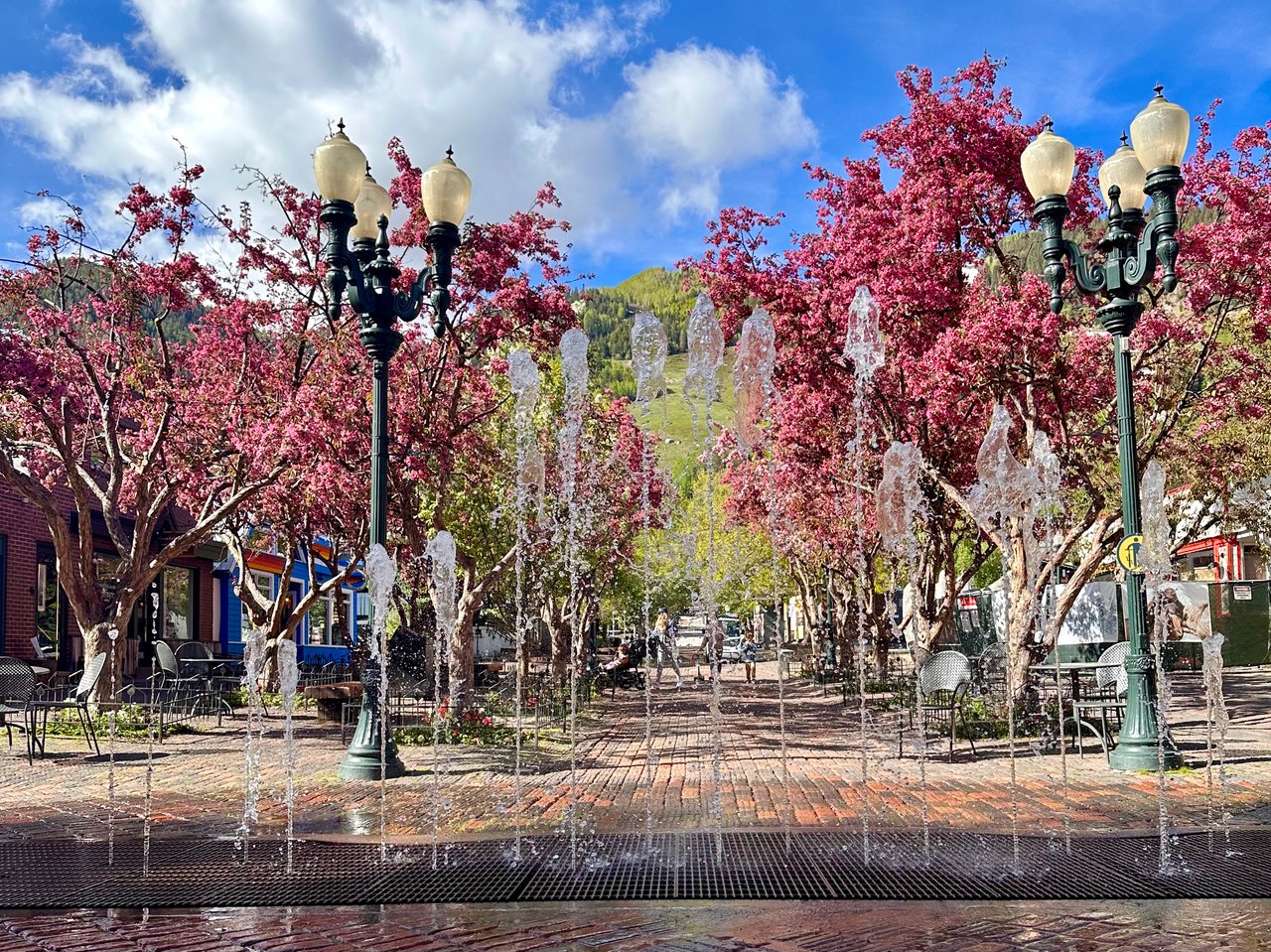
Two condos can sit across the street from each other in downtown Aspen, list at similar prices, and still have completely different rental futures. One can be booked on a nightly basis for as long as the owner wants. The other might spend years waiting for permission to do the same thing at all.
The dividing line runs down Original Street. Everything to the west sits inside the Commercial Core, Commercial, or Lodge zoning districts, where the city places no cap on short-term rental permits. Everything to the east falls into the Residential Multifamily, or R/MF, zone, where permits are capped and, as of this year, backed up behind a waitlist that has been growing since 2022.
For a buyer comparing two similar units on paper, that zoning line is worth more to the eventual rental math than square footage, view, or even price per square foot. Here is what it actually means for a downtown Aspen condo purchase in 2026.
The Waitlist Is Not Shrinking
As of May 15, 2026, the R/MF zone carried 55 pending applications for a short-term rental permit, the longest waitlist of any capped zoning district in the city. Ten of those applicants have been waiting since 2022, the year the current permit system took effect. City data presented to council shows the R/MF zone loses roughly 20 active permits a year through non-renewal, while roughly 12 new applicants join the waitlist annually. That is not a list that drains. It compounds.
Most of that backlog sits close to the Commercial Core rather than far from it. City figures show 83 percent of the R/MF waitlist is located in the area east of downtown, the same pocket of blocks between Original Street and the Roaring Fork River that carries the zone's densest concentration of existing permits. A buyer looking at a condo there in 2026 is not simply behind a line at city hall. That line predates their offer by several years and is getting longer, not shorter, according to Aspen Journalism's reporting on the program.
None of this touches the Commercial Core, Commercial, Lodge, Commercial Lodge, or Lodge Preservation zones on the other side of Original Street, where the city places no ceiling on the number of STR-C permits it will issue. A downtown core condo in one of those zones can apply for a permit the day it closes and start renting the next season, no waitlist involved.
What a Permit Actually Buys You
Even inside the unlimited zone, not every permit works the same way. Aspen sorts short-term rentals into three categories, and starting in 2026 each one carries a different total tax load on every night booked: 12.35 percent for a traditional lodge, 17.35 percent for an owner-occupied or lodge-exempt rental, and 22.35 percent for a Classic short-term rental, the category most standalone condos fall under.
That ten-point spread between the lodge rate and the Classic rate is not a rounding error. On a $500 nightly rate, it is roughly $62 in combined tax at the lodge rate versus roughly $112 at the Classic rate, money that comes off the top of gross rental income before an owner sees a return. A buyer modeling income on a downtown condo needs to know which of the three categories the unit actually qualifies for before running the numbers, not after closing.
Permits also do not travel the way many buyers assume. STR-C permits are annual and tied to the property's ongoing compliance rather than automatically inherited at sale, and a permit is treated as abandoned if a full year passes with zero rental tax filings on record. A previous owner's rental history does not guarantee anything for the next buyer. What a listing calls rental-ready needs to be verified against current zoning and permit status, not assumed from how the seller used it.
The city is also mid-transition on the administrative side. Aspen is moving its short-term rental licensing and tax filing system to a new platform called Localgov, with access to the prior MuniRevs and GovOS system ending May 31, 2026. Existing accounts are supposed to carry over automatically, but it is one more reason to confirm permit status directly with the city rather than relying on paperwork a seller hands over at closing.
The Building Adds Its Own Terms
Zoning sets the outer boundary. The building sets the rest. A handful of downtown core condo buildings show how much variation exists within a single block.
- Some buildings, including Aspen Alps and Aspen Townhouses by the River, have significant special assessments either planned or underway, on top of regular HOA dues, a detail worth asking about before assuming quoted dues reflect the full carrying cost.
- Certain buildings restrict pets outright unless they qualify as service animals, a rule buyers will find at addresses like 725 East Main Street.
- At least one downtown building, Silverglo, bans wood-burning fireplaces entirely, a rule that can surprise a buyer touring a unit with an existing hearth.
- Location creates its own tradeoffs. A condo near the Aspen Art Museum can mean occasional event-night noise in exchange for an unbeatable walk to the gondola and downtown dining.
- Not every downtown property is a standard condo under city rules. Aspen defines a lodge as a building with at least 15 units, shared reservation and cleaning services, combined utilities, on-site management, and at least three qualifying amenities. Buildings that meet that bar, or that operate under a condo-hotel structure, can carry a different rental framework than a standalone condo two doors down. The Gant is one example of a building where that distinction matters, and its resale market has stayed active regardless of the broader slowdown: a top-floor unit there closed in May 2026 at $5.385 million, or $4,236 per square foot, furnished.
None of this shows up on a standard listing sheet. It shows up in HOA governing documents, reserve studies, and a phone call to building management, all worth doing before an offer goes in rather than during the inspection period.
Why the Line Matters More Every Year
Downtown core condo supply has been effectively frozen since 2012, when a city ordinance banned new free-market condos and penthouses in the commercial core. No amount of demand adds new inventory inside that boundary. The Aspen condo median sale price reached $3.175 million in 2025, up 11 percent from 2024, even as the broader single-family market saw closings and dollar volume slow through the first half of 2026.
Fixed supply on one side of a hard zoning line, paired with a lengthening waitlist on the other, is why the Original Street boundary deserves more attention than most buyers give it. A condo's rental future is not determined by its finishes or its floor. It is determined by which side of one street it sits on, and increasingly, by how long that side's waitlist has already been building.
Before You Write an Offer
A few questions are worth answering before an offer goes in on any downtown core condo:
- Which zoning district is the property actually in? The city's STR zoning map will confirm it in minutes and settle any confusion about which side of Original Street a building falls on.
- If the zone is capped, is there an active, current permit attached to the unit, or would a new buyer start at the back of the waitlist?
- Which permit category would apply, lodge, owner-occupied, or Classic, and what does that mean for the effective tax rate on rental income?
- Does the building meet the city's lodge definition, or does it operate under a condo-hotel structure with its own rental rules separate from the STR ordinance?
- What do the HOA documents say about pets, fireplaces, rentals, and any pending special assessments?
- What is the Real Estate Transfer Tax exposure? Aspen's RETT runs approximately 1.5 percent of the purchase price, paid by the buyer, with the first $100,000 excluded from the housing portion of that calculation.
A Short FAQ
Can a buyer just wait out the R/MF waitlist? Some try, but the math argues against treating it as a short-term plan. Ten of the current 55 applicants have already been waiting since 2022, and the zone is adding new waitlist entries faster than it clears old permits.
Does an active STR permit automatically transfer when a condo sells? No. Permits are annual and tied to ongoing compliance rather than guaranteed to pass with the deed. A buyer should confirm current status with the city rather than relying on a seller's rental history.
Is the 1.5 percent RETT the only closing cost specific to Aspen? It is the largest cost tied directly to the transfer, but it sits alongside standard state and county closing costs. Buyers of capped-zone units should also budget time, not just money, for permit verification before assuming a condo's rental plans will work as advertised.
Ready to look at a specific downtown core building before you write an offer? Krista Klees | Palladium Group can walk through the zoning, the permit status, and the building's own rules with you privately, before any paperwork is on the table. Request a private consultation.